
Flipping the Script on Outdoor Narratives
Part One of a Rant About Outdoors and Adventure Non-Fiction By Men

Fair warning: This has some hot takes on a specific genre of books (adventure non-fiction) that this audience might be a fan of. Curious about what y’all think of the hot takes :)
I was recently reading a book about one man’s adventure in a national park that felt necessary for my own book research. I really enjoyed the beginning half that described the history and geology of said park, but then the adventure began. Actually, details about past misadventures began, and it became harder and harder for me to pick the book up once that journey started. (Note: I’m not going to tell you what book I read because I’m not here to yuck anyone’s yum, and I actually do think the writing was good and the author was honest and open in a commendable way, and maybe I’ll even encounter this person someday, so let’s not burn any bridges, amiright?)
I read on, though, because “market research” and this was a New York Times Bestseller. Yet, I wondered if I was missing something.
Nearly halfway through, I decided to give up. The truth is, I just didn’t care. I didn’t care that they finished their journey after getting super sick and almost dying during the first part. The whole idea of pushing one’s limits just doesn’t make me interested.
While the writing was good, I have become so tired of outdoorsy White dude adventures. I also became a bit livid when the author described a series of his and his adventure partner’s spectacular failures (all due to their lack of planning and outsized hubris) to deliver a product to their publishers, yet still, beyond all odds were successful in their careers. This would never happen to a woman or a person of color, I grumbled to myself.
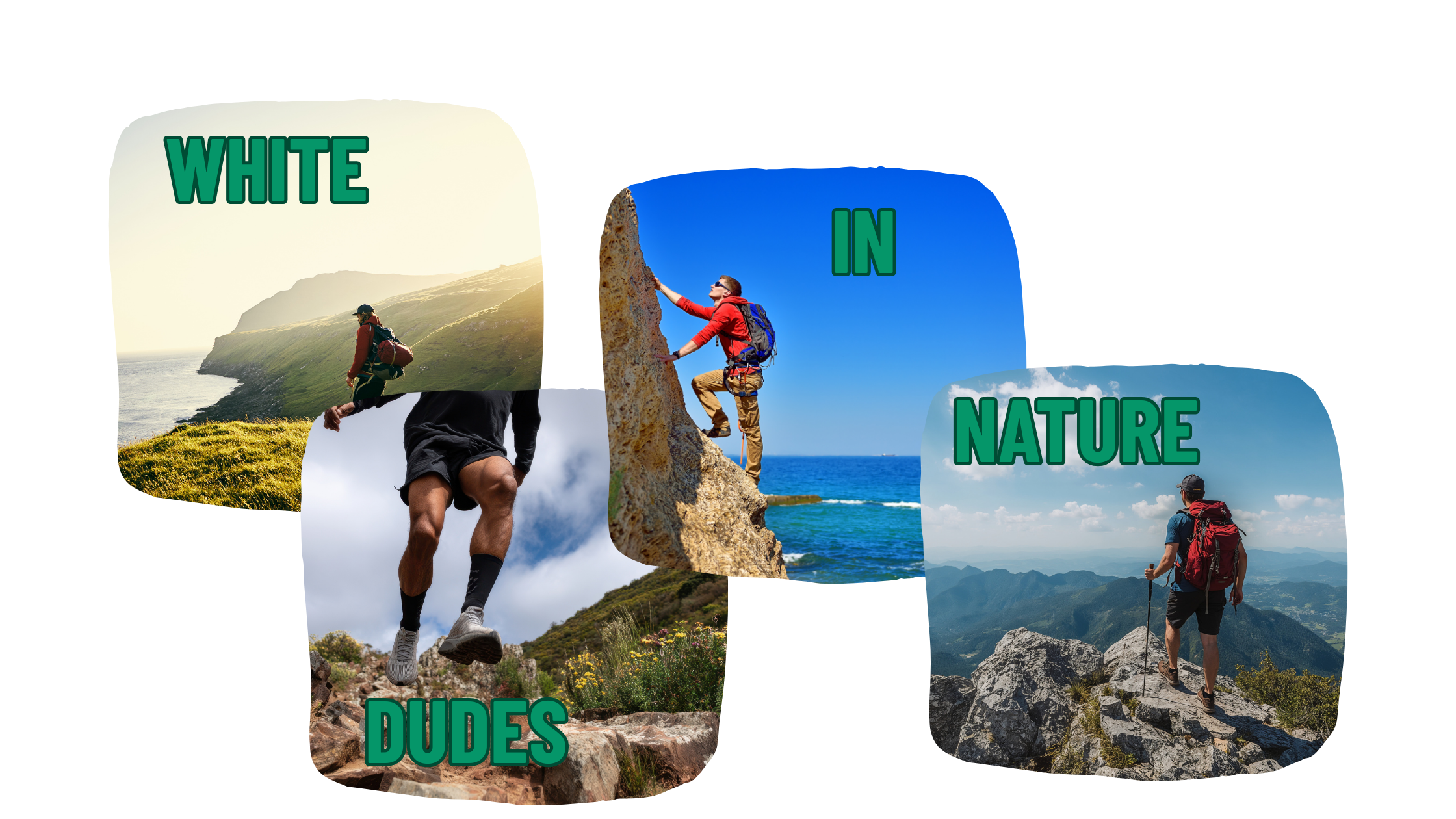
Outdoorsy White Dude Stories Are Not My Jam
The story struck me as very similar to Free Solo, the story of climber Alex Honnold’s journey to free climb El Capitan in Yosemite. It was a pure act of hubris to accomplish something no one is asking him to do. For what purpose? My reactions to both the movie and the book struck me as similar to my bafflement at the books I read for our “Transcendentalism Unit” in my high school English class, where we read Thoreau’s Walden, and for extra credit, we could read Jon Krakauer’s Into the Wild.
I didn’t get the point of Thoreau’s and Chris McCandless’ desired isolation, independence, and “self-reliance.” I kept thinking it was exceptionally selfish, as in the case of McCandless, who left a lot of people who loved him in his wake. He went out into the wilderness completely unprepared and unskilled. And Thoreau’s theories of self-reliance were, in fact, kind of bullshit. I felt vindicated by Emily Temple’s take on Walden and Thoreau himself in Literary Hub where beyond being exceptionally boring, she writes, “That’s not even getting into the fact that Walden is more or less bullshit, because writing a self-important book about self-reliance and ‘life in the woods’ doesn’t really work when you’re just throwing house parties all the time and your mom is still doing your laundry.”
Oh, and also, did you know that, while Edward Abbey was out in the wilderness of Arches National Monument for two summers serving as a ranger, his wife and son were with him part of the time? Yet reading Desert Solitaire, one would never know. “Solitaire,” my ass. I mean, I honestly enjoyed the book, but I’ve learned to take these White dudes with a grain of salt, especially when they’re notable womanizers and deadbeat dads, as Abbey apparently was.
I still had more respect for this modern man whose book I couldn’t finish, but I still didn’t like it. I realize that I’m just not the right audience for the book. Which is totally fine. There are a lot of books I won’t read because they’re not my jam. And there are a lot of people who won’t read my book because they’re not my audience. However, what began to niggle at me with this one is that this is the market I’m working to publish in. Right now, the publishing market is precarious and does not bode well for someone without a huge platform. Thus, it doesn’t bode well for people like me (I wrote more about the publishing market in this post).
As I read, I couldn’t help but think that these outdoorsy White man stories were going to continue to be bought by publishers no matter what. The stories that won’t be bought or will be purchased for much less money? The ones by women and people of color. In some cases, they might, if the author in question has a large enough platform. As such, my annoyance was rooted less in the fact that I just didn’t like the story, but more so that it felt like a book like this was going to be bought instead of a book about a Millennial mom trying to learn about climate change through the national parks.
The Harmful Narratives
While all of that annoyed me, I also felt like we’re just pushing out the same tropey narratives that are actually pretty harmful. There’s the conquering of nature approach (i.e. “Man vs. Nature) in some of the more modern books, or if not that, an old-school conservationist approach that “leaving wilderness alone is our solution,” which is counter to the Indigenous use of the same land (“The Pristine Wilderness Myth”).
Man vs. Nature
The Man vs. Nature narrative is a common one and is kind of rooted in the whole colonial “manifest destiny” myth. Basically, “man” must go through the trials and tribulations to “conquer” nature.
What that looks like in modern narratives is something like the book I didn’t like enough to keep reading: man goes on a journey (in this case, a hike through a national park) and experiences a bunch of hardship, yet he perseveres and succeeds in the end. Listen, I didn’t read the whole book, so I can’t tell you if the ending is exactly that, but common sense would make me think it is, in fact, part of it. Even if it doesn’t end in conquering, the journey is a part of that.
Even the Chris McCandless story has elements of that, even though he did, in fact, die because of his lack of experience and ignorance on said journey. Yet still, he’s been lauded as a hero to so many White boys over the last few decades.
The idea of “Manifest Destiny” is the larger concept that undergirds this narrative. The concept was used as justification for Western expansion of the United States (and therefore for the genocide of Indigenous peoples) because “God” told the colonizers it was their land. While we might not think of Manifest Destiny in those terms today, it is very much a part of the American identity. We might call it “American exceptionalism” today.
It’s also the concept that essentially sees the dominion over the land/nature as a part of that. The current narratives might not actively be extracting from nature like the true evildoers in Big Oil, but there is a softer assault in that nature is something to be overcome, versus lived in symbiosis with.
The Pristine Wilderness Myth
This is actually the myth that I’m working to combat the most through this project. In a 2024 cover story in The Atlantic called “Give the National Parks Back to the Tribes,” David Treuer writes, “In truth, the North American continent has not been a wilderness for at least 15,000 years: Many of the landscapes that became national parks had been shaped by Native peoples for millennia.”
The concept “wilderness” was, in fact, made up by White people.
“We did not think of the great open plains, the beautiful rolling hills, and winding streams with tangled growth, as ‘wild,’” wrote Chief Luther Standing Bear of the Oglala Sioux tribein Land of the Spotted Eagle, describing a deeper connection to the land and nature. “Only to the white man was nature a ‘wilderness’…To us it was tame. Earth was bountiful and we were surrounded with the blessings of the Great Mystery.”
This was most definitely not the history I knew growing up. I assumed national park land was previously completely uninhabited and “wild,” in that no humans had touched it, so that it was preserved in order to keep it that way.
Geographer William Deneven called this the “pristine myth.” “The belief that all of nature was once a sparsely populated wilderness, where humans had little or no influence,” writes Claudia Gieb for Sapiens anthropology journal. “Many Europeans and Euro-Americans imagined the landscapes of the Americas as prime examples of such natural spaces.” It was embedded into the very idea of European colonialism.
It’s a much more palatable concept for conservationists who don’t necessarily believe in the “dominion” over land and nature. But it’s equally as harmful.
Edward Abbey falls into this category. In his chapter “Polemic: Industrial Tourism and the National Parks,” he rails against the continued expansion of roads and leisure centers in and near the national parks, wishing to preserve the unpeopled places.
“Progress has come at last to the Arches, after a million years of neglect,” he writes. “Industrial Tourism has arrived.”
I have a feeling the Southern Paiute peoples would take issue with the “millions of years of neglect.” They were driven away from the land ecause the Mormon settlers planted down and hoarded all the best resources for food and water. But the Paiute and Ute thrived on those lands for millennia because they knew it and managed it.
So you see why I take issue with all of this. They’re rooted in the same tropes that have been around for decades, and they center the experience of the White dude. Fine to have those out there in the world, but what about what else is out there?
What Else IS Out There?
As a matter of fact, a lot of books and stories that center on different experiences than the White dude are out there. They may not sell as many copies, but they are there, and we all should be reading them.
As such, stay tuned for my next post, which will give you some options for some different adventure narratives that you might enjoy!
In the meantime, I’m so very curious about your thoughts on these hot takes! Comment below!